The 3-Step Formula for Prioritizing Tasks (No Overthinking Required!)
Table of Contents
Ever stared at your to-do list feeling completely stuck? You’re not alone 🤔
Ten minutes is how long you spend scrolling social media while waiting for your coffee to brew ☕
That’s also how long it takes to learn this simple prioritization system that actually works.
No complex spreadsheets. No fancy apps. Just three straightforward steps that’ll help you figure out what to tackle first.
Why Most Prioritization Methods Don’t Stick
Let’s be real: most task management systems are way too complicated. They want you to color-code everything, assign multiple labels, and practically earn a PhD in productivity before you can even start.
Who has time ⌚ for that? Not me, and probably not you either.
The truth is, you need something that works right now, not another system you’ll abandon in a week.
The 3-Step Formula That Changed Everything
Here’s the deal: I run a small business, manage two kids’ schedules, and handle two energetic Corgis in a Manhattan apartment. If I can make this work, anyone can.
Ready for the three steps? Here they are:
Step 1: The Two-Minute Rule

First things first: look at your to-do list. If something takes less than two minutes, do it right now.
❗ Yes, right now.
Don’t write it down.
Don’t add it to your list.
Just get it done.
This could be:
- Sending that quick email 📩
- Making that brief phone call 📱
- Scheduling that appointment
- Filing that document
- Responding to that text
Why this works: Your brain uses more energy deciding when to do these tiny tasks than actually doing them.
Plus, each small task you complete gives you a quick win and builds momentum.
This Moleskine Notebook is perfect for jotting down your quick tasks and tracking your progress.
Step 2: The Impact Question

Now, look at everything else on your list. For each task, ask yourself one simple question:
“What happens if I don’t do this today?”
That’s it. No complicated scoring systems. No matrices. Just one straightforward question.
Sort your tasks into three piles:
- Bad things happen if I don’t do this today
- Someone might be annoyed, but nothing terrible will happen
- Nothing really changes if this waits
Focus on the first pile. Everything else can wait.
This Whiteboard Calendar helps you visualize your priorities and keep track of deadlines.
Why this works: It forces you to think about real consequences instead of perceived urgency. Most things we think are urgent actually aren’t.
Step 3: The Energy Match

Here’s where most systems fail: they don’t consider when you should do things.
Look at your “must-do” pile and match tasks to your energy levels:
- Morning ☀️ person? Do your thinking work then
- Afternoon slump? That’s for easy admin tasks
- Evening surge? Save your creative work for then
This Time Blocking Planner helps you map out your day according to your energy levels.
Why this works: You’ll get more done with less effort because you’re working with your natural rhythms, not against them.
Making It Work in Real Life
Here’s how to put this into practice:
Start Your Day Right:

- Take 5 minutes each morning 🌅
- Handle any two-minute tasks
- Check what absolutely needs doing
- Match those tasks to your energy levels
That’s it. No complicated systems. No overthinking.
Common Mistakes to Avoid:
- Adding too many tasks to the “must-do” pile
- Ignoring your energy levels ⚡
- Trying to plan too far ahead
- Making the system more complicated than it needs to be
Remember: the goal isn’t perfection. It’s progress.
Tips for Sticking with It
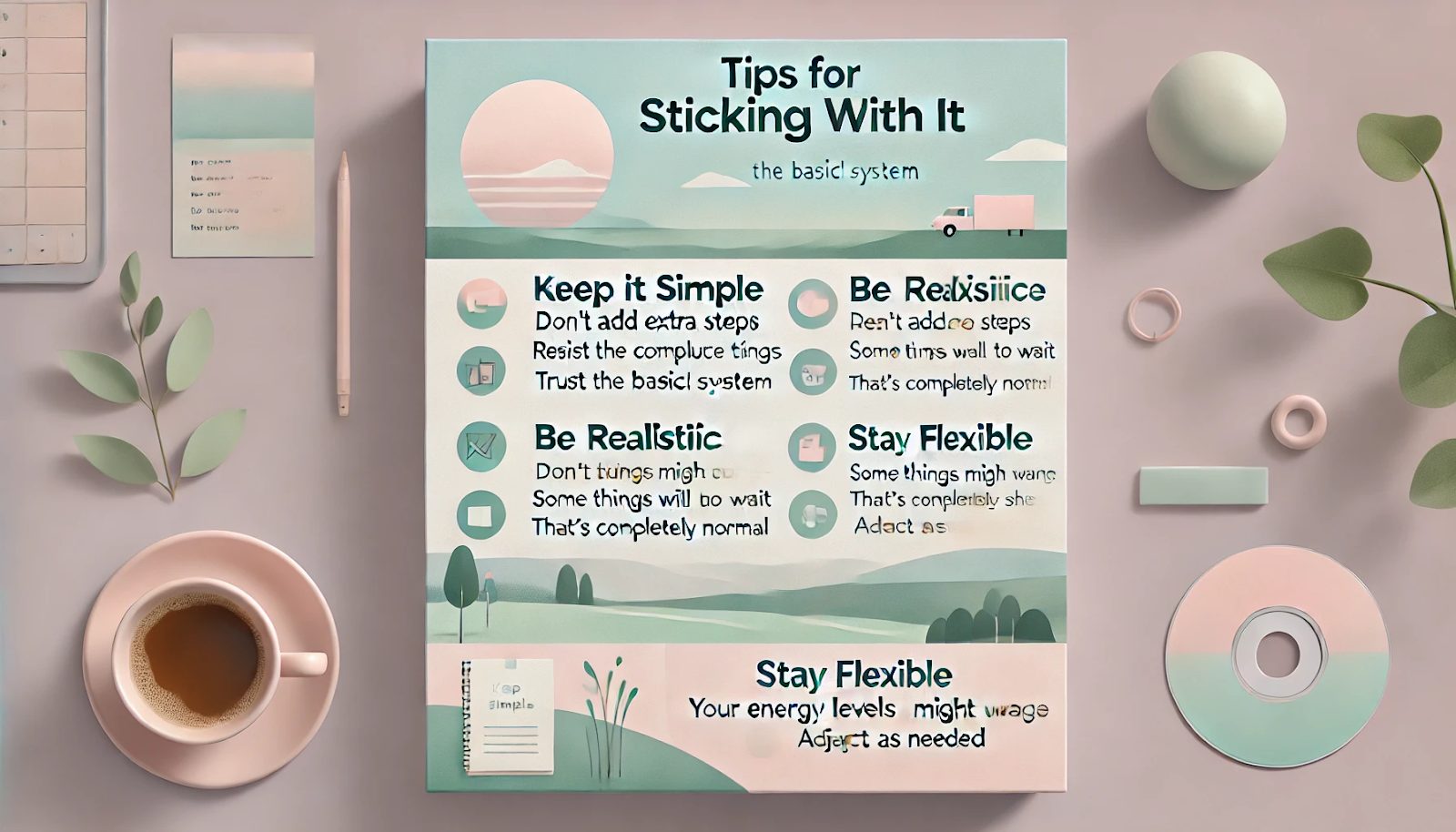
1. Keep It Simple
- Don’t add extra steps
- Resist the urge to complicate things
- Trust the basic system
2. Be Realistic
- You can’t do everything
- Some things will have to wait
- That’s completely normal
3. Stay Flexible
- Your energy levels might change
- Priorities might shift
- Adjust as needed
Handling Interruptions
Because life happens. Here’s how to deal:
When Someone Drops By:
- Apply the two-minute rule
- If it’s quick, handle it
- If not, add it to your list and apply steps 2 and 3
When Plans Change:
- Reassess your “must-do” pile
- Adjust your energy-matching
- Keep moving forward
Tools That Help (Without Taking Over)
Keep it basic:
- Simple note-taking app or paper 📝
- Basic calendar 📆
- Timer for two-minute tasks
This Minimalist Task Timer helps you stick to the two-minute rule without overcomplicating things.
Dealing with Overwhelm
When everything feels important:
- Go back to the impact question
- Be brutally honest
- Remember: not everything is urgent
This Stress Management Journal can help you track patterns and reduce overwhelm.
Making the System Stick
Weekly Check-in:
- Review what worked
- Adjust what didn’t
- Keep it simple
Monthly Review:
- Look for patterns
- Make small adjustments
- Stay committed to the basics
Real Talk About Productivity
Here’s what nobody tells you:
- Perfect systems don’t exist
- Simple usually works better
- Consistency beats complexity
The goal isn’t to do everything. It’s to do the right things at the right time.
When Things Get Crazy
Because they will. Here’s what to do:
- Double down on the two-minute rule
- Be extra strict with the impact question
- Pay even more attention to your energy
Building Better Habits
Start small:
- Use the two-minute rule for one day
- Add the impact question the next day
- Include energy matching by the end of the week
Build gradually:
- Don’t try to change everything at once
- Let each step become natural
- Add complexity only if needed
Making Time for What Matters
The real purpose of this system isn’t just getting things done. It’s about:
- Creating space for what’s important
- Reducing stress about tasks
- Building confidence in your decisions
The Bigger Picture 🖼️
Remember why you’re doing this:
- To reduce stress
- To accomplish more
- To have time for what matters
Moving Forward with Your New System
Start right now:
- Pick one task
- Apply the two-minute rule
- If it takes longer, use the impact question
- Match it to your energy level
Prioritizing Tasks Made Simple
You now have a straightforward system for tackling your to-do list without the usual stress and overthinking.
Three simple steps, endless possibilities for getting more done with less mental effort.
The only question left is: what will you accomplish first?