7 Easy Hacks for Organizing a Shared Home Office That Actually Work
Table of Contents
Cramped for space but still need to get work done? Working from home with another person doesn’t have to mean constant battles over desk space, tangled cords, or missing supplies. Especially when you implement the life-changing tips shared in this article!
These seven hacks will help you turn your shared office chaos into a productivity paradise without needing extra square footage or spending a fortune 💰
1. Zone Your Space With Clear Boundaries

The number one cause of shared office tension? Unclear boundaries!
When two people work in the same space, stuff gets mixed up. Fast.
The fix is simple: create clear zones for each person. This isn’t about building walls or buying new furniture. It’s about assigning specific areas to each person.
Use colored tape on the floor or desk to mark territories if needed. Yes, like you’re playing office Monopoly 🎲
Even a simple line down the middle of a shared desk can work wonders. “This side is mine, that side is yours” makes everything clearer.
You can use this super affordable washi tape from your local craft store or order this removable colored tape that won’t damage surfaces.
For bookshelf sharing, try color-coded bins. My husband and I each have our own color (blue for him, yellow for me), and it stops us from constantly asking, “Have you seen my…?”
2. Vertical Storage Is Your Secret Weapon

When floor space is limited, look up! 👆
Walls are the most underutilized real estate in any home office. They can hold way more than just pictures of your kids or inspirational quotes.
Install simple floating shelves above your desk for items you don’t need daily. The wall space on either side of your desk can hold narrow shelving units for books, supplies, or decorative items.
Pegboards are absolute game-changers in a shared office. They take up zero floor space but can hold an impressive amount of stuff 📦
This adjustable pegboard system lets you customize the configuration whenever your needs change. Hooks, bins, and shelves can all be moved around without tools.
Over-the-door organizers aren’t just for shoes! They make perfect homes for office supplies, especially those oddly shaped items that never fit neatly in drawers.
Even magnetic strips (like those used for kitchen knives) can be repurposed to hold metal office supplies like scissors, letter openers, and rulers 📏
3. Create a Shared Supply Station
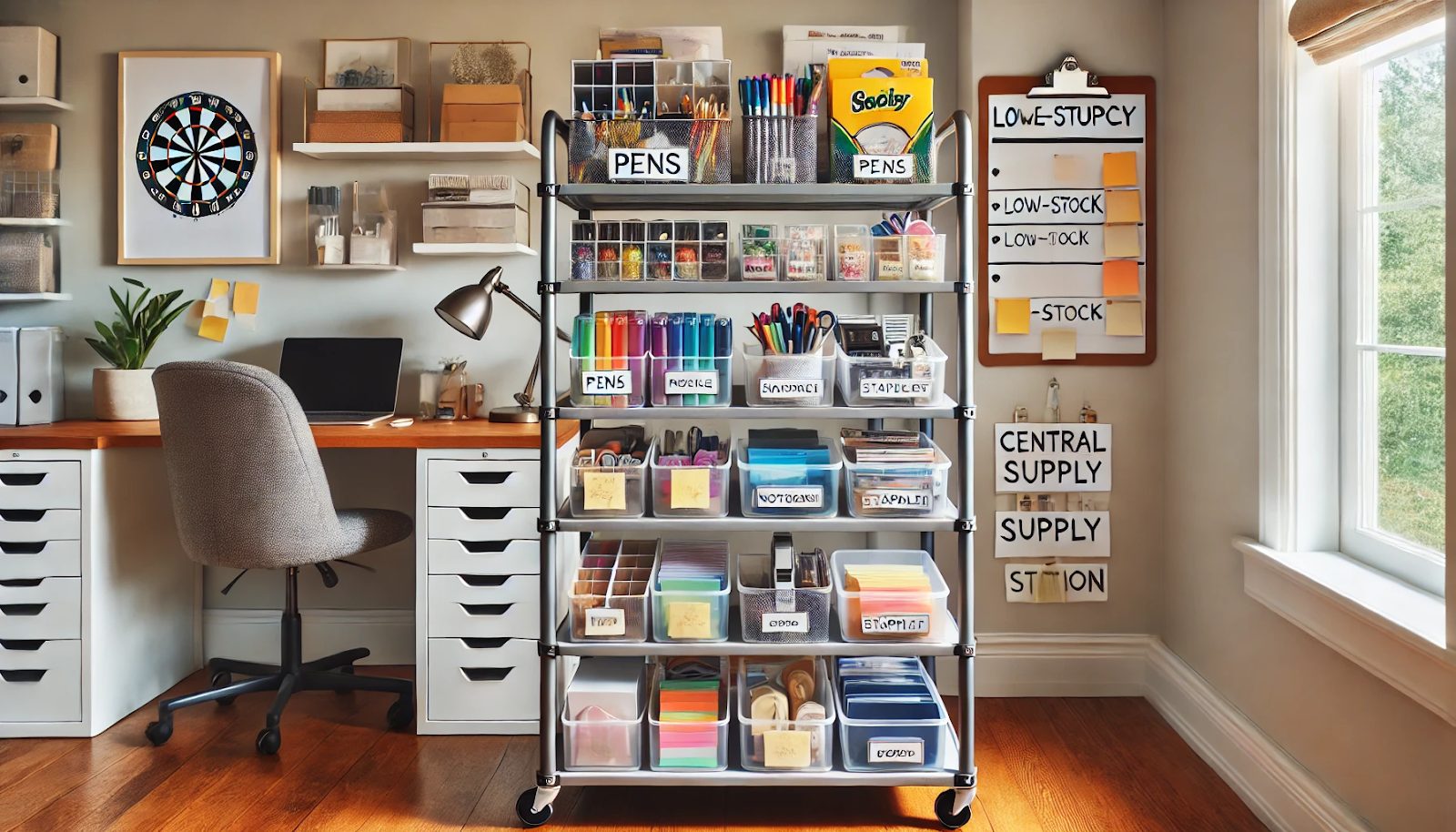
Fighting over the last working pen? Not anymore.
A central supply station eliminates the “that’s mine” syndrome that plagues shared spaces. It’s like the Switzerland of your office—neutral territory where resources are pooled for the common good.
Find a rolling cart with multiple tiers that can be moved wherever needed. The top tier can hold daily items like pens, notebooks, and sticky notes. Lower tiers can store less frequently used supplies 🖇️📌
This three-tier rolling cart is sturdy enough for heavy items but slim enough to tuck between desks when not in use.
Label everything clearly. I mean everything. Drawers, boxes, bins—all of it. And be specific: “Ballpoint Pens” rather than just “Pens.”
Set up a simple system for tracking shared consumables. A whiteboard listing items that are running low makes restocking simpler and prevents the blame game when something runs out.
4. Cable Management That Actually Works
Nothing says “office chaos” like a tangled mess of cords. In a shared space, the cord situation can quickly become a nightmare 🔌
First, audit all your cords. Do you really need them all? Wireless options exist for almost everything now.
Next, identify each cord with simple tags 🏷️ You can buy pre-made ones or make your own with bread tags or colored tape.
Group cords by workstation using zip ties or velcro wraps. This prevents the frustrating “cord fishing” expedition when something gets unplugged.
Run long cords along the edges of the room using discreet cord channels that attach to baseboards. These paintable cord covers blend right in with your walls.
Power strips with built-in cord management, like this surge protector with designated slots for each plug, keep things organized from the source.
For cords that must cross common areas, invest in a low-profile cord cover that prevents tripping and protects the cords themselves.
5. Time-Share Scheduling System
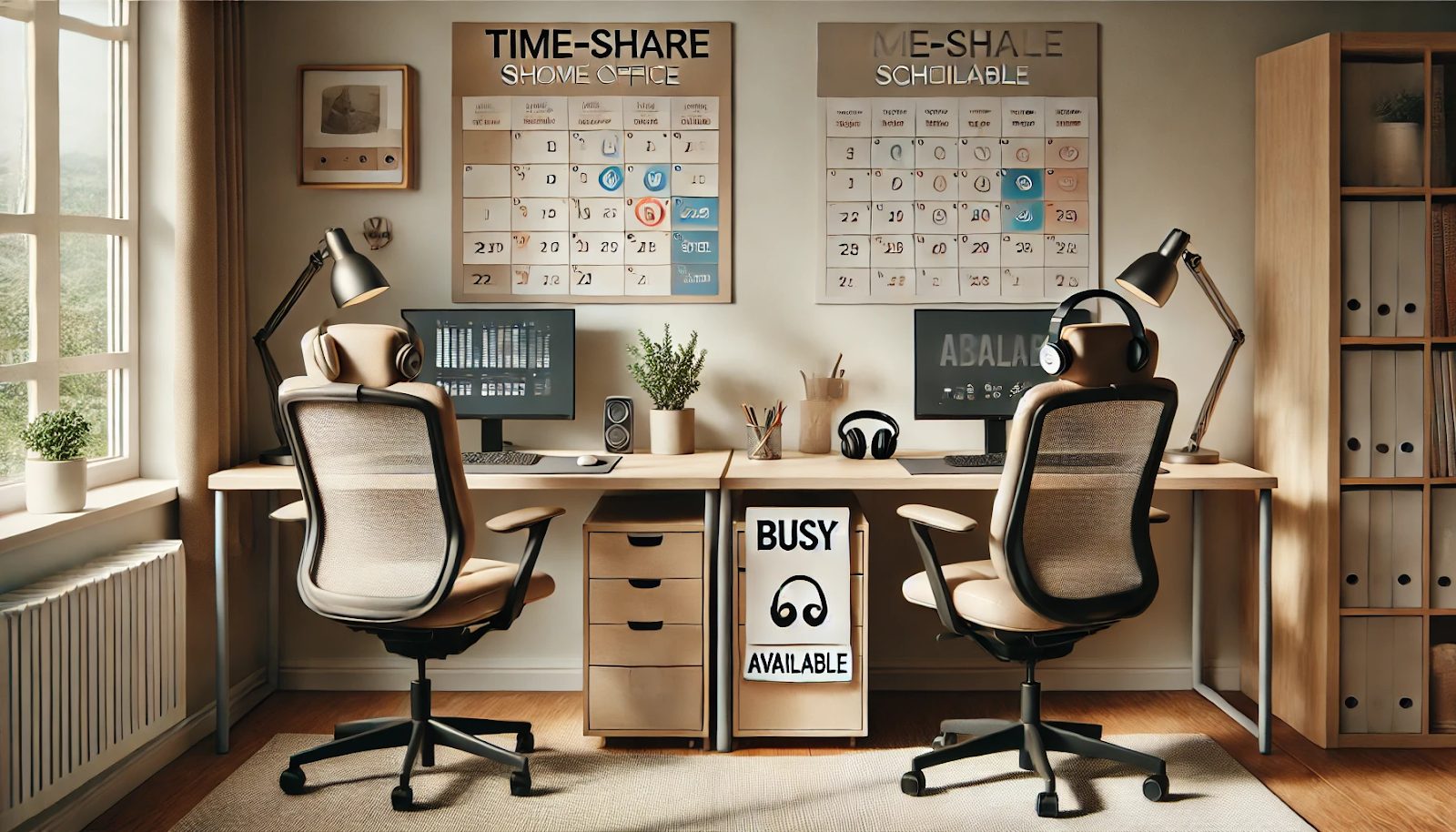
Not all shared office conflicts are about physical space. Sometimes, it’s about noise and interruptions.
Create a simple visual system for communicating availability. A small desktop flag or sign that indicates “In a Meeting” or “Deep Work” can prevent unnecessary interruptions.
This reversible desk sign has clear “Available” and “Busy” sides, eliminating any confusion.
Schedule “quiet hours” when no calls or meetings happen. This gives both people predictable periods of uninterrupted focus time ⏰
For video meetings, work out a rotation for who gets the most visually appealing background. Maybe you get the bookshelf backdrop on Mondays, Wednesdays, and Fridays, while your office mate gets it Tuesdays and Thursdays.
Invest in good headphones for both people. These noise-canceling headphones block out ambient noise and signal to others that you’re in the zone.
A shared digital calendar visible to both workers can prevent double-booking the office for important calls or meetings. Even a simple wall calendar works if you’re both diligent about using it 📆
6. Implement a Paper Processing System
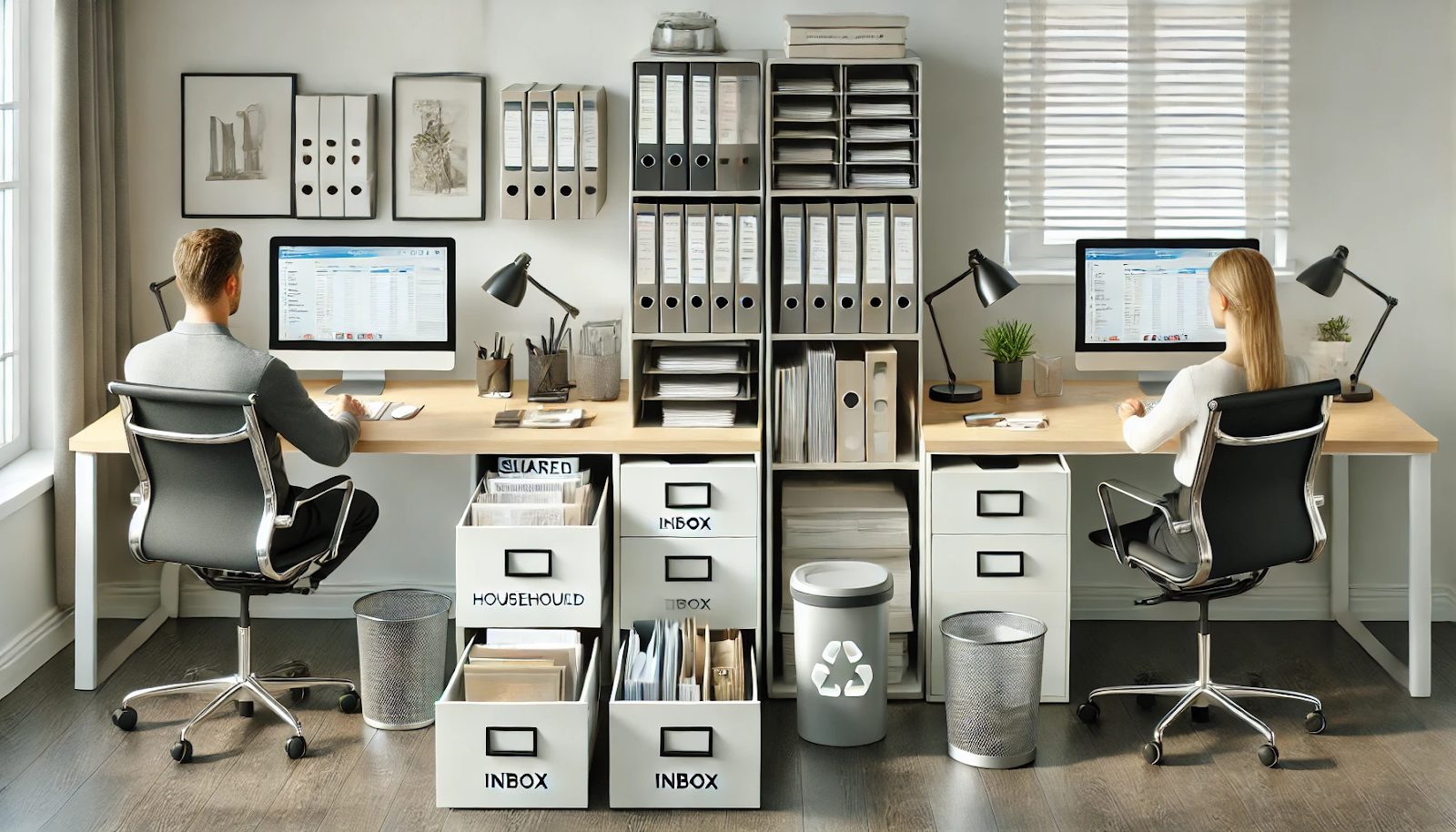
Despite our digital world, paper still piles up. In a shared office, it’s crucial to have a system that prevents important documents from getting mixed up or lost 🫠
Create separate inboxes for each person. When mail or paperwork comes in, it goes directly to the right inbox 📨
Set up a shared filing system with clearly labeled folders for household documents, but keep work papers in personal filing systems.
This desktop file organizer 📂 keeps current projects accessible but neat.
Schedule a weekly “paper purge” where you both process your inboxes, file what needs keeping, and recycle the rest.
The goal is to handle each piece of paper only once.
When it arrives, immediately decide: act on it, file it, or toss it.
This system prevents the all-too-common scenario of important papers disappearing under someone else’s work pile—a major source of shared office tension!
7. Establish Clear Office Protocols
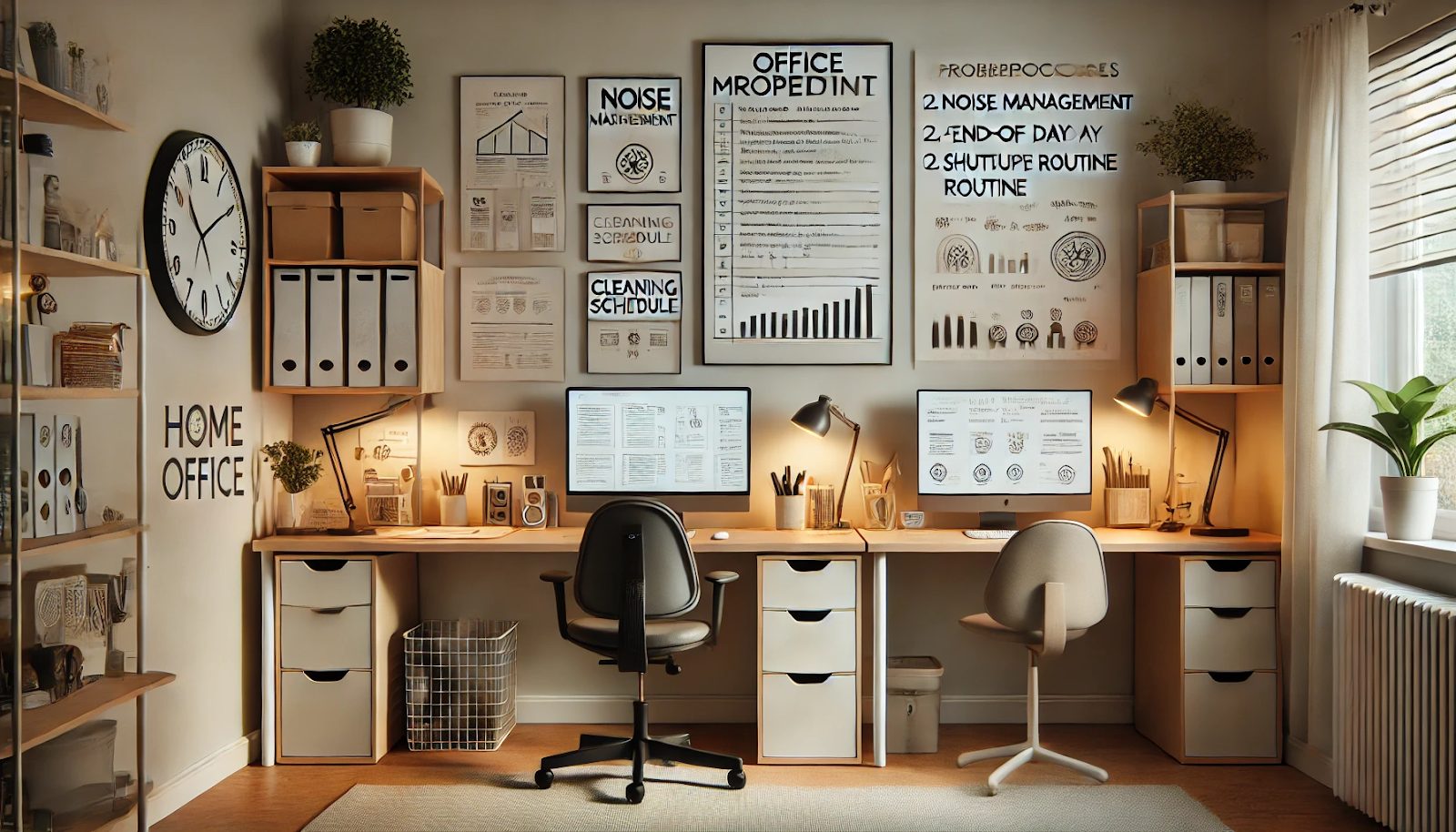
The final hack isn’t about physical organization but behavioral organization. Even the best-designed shared office needs ground rules to function smoothly.
Sit down together and agree on protocols for common pain points:
- Noise management during calls or focused work
- Cleaning responsibilities and schedules
- Shared supply replacement
- Guest policies for when friends or colleagues visit 👭
- End-of-day shutdown routines
Write these agreements down ✍️ and post them somewhere visible. Having explicit protocols prevents misunderstandings and resentment.
The most important protocol? Regular check-ins to discuss what’s working and what needs adjustment. A shared office is always a work in progress.
Organizing Your Shared Office Is an Ongoing Process
Setting up an organized shared home office isn’t a one-time task. It’s a system that evolves as your needs change.
The best-shared offices combine clear boundaries with thoughtful systems. When everyone knows where things belong and respects shared protocols, working together becomes not just tolerable but actually pleasant 🏡
With these seven straightforward hacks, you can transform even the tightest shared workspace into an organized, peaceful environment where everyone can focus and thrive.
No extra room required 🙌🏻