How to Set Up a Fool-Proof Chore System That Actually Works
Table of Contents
Ever walked into your home after a long day only to trip over shoes, dodge toys, and sigh at the sink full of dishes? You’re not alone 🤝
After many failed attempts, I finally cracked the code on a cleaning/chore system that actually sticks.
Not just for a week. Not for a month. But consistently, every single day. #HumbleBrag
Ready to transform your home from chaotic to calm just like I did?
Let’s get into exactly how to build a chore system that works for even the busiest families.
Why Most Chore Systems Fail
Most chore systems crash and burn within weeks. Why? They’re too complicated, too rigid, or simply not realistic for actual humans with actual lives.
Classic mistake: Creating a color-coded spreadsheet with 47 daily tasks when you can barely remember to brush your teeth some mornings 🦷
Another common pitfall: Expecting perfection from day one.
Habits take time to build, especially when multiple people are involved.
The third reason chore systems fail? They don’t account for real life.
Soccer practice runs late. Work deadlines pile up. Kids get sick. Life happens.
But don’t worry — we can do better!
Step 1: Take Honest Stock of Your Household Needs

Before assigning a single task, take a good look around your home.
What actually needs to be done daily? Weekly? Monthly?
Make a list of everything that keeps your household running. Everything from feeding pets to taking out trash to paying bills 🧾
Now, rank these tasks by importance. What truly matters for health and safety? What’s just nice to have?
In our apartment, daily pet care, dishes, and basic pickup are non-negotiable.
Vacuuming can wait an extra day if needed. Window cleaning? That’s a monthly luxury.
This realistic assessment prevents the most common chore system killer: trying to do too much, too soon 😪
Step 2: Realistically Match Tasks to People

Time for some brutal honesty: Not everyone in your household can (or should) do every task.
Consider three factors when assigning chores:
- Age and ability
- Schedule and availability
- Natural strengths and preferences 💪
My 7-year-old can’t operate the washing machine, but she’s a champ at sorting socks.
My partner works late Tuesdays, so that’s not his night to cook dinner.
Create a basic chart matching household members to tasks they can reasonably accomplish.
The key word here is reasonable. Setting your 5-year-old up to mop the entire house will frustrate everyone involved.
Step 3: Create Clear, Specific Expectations
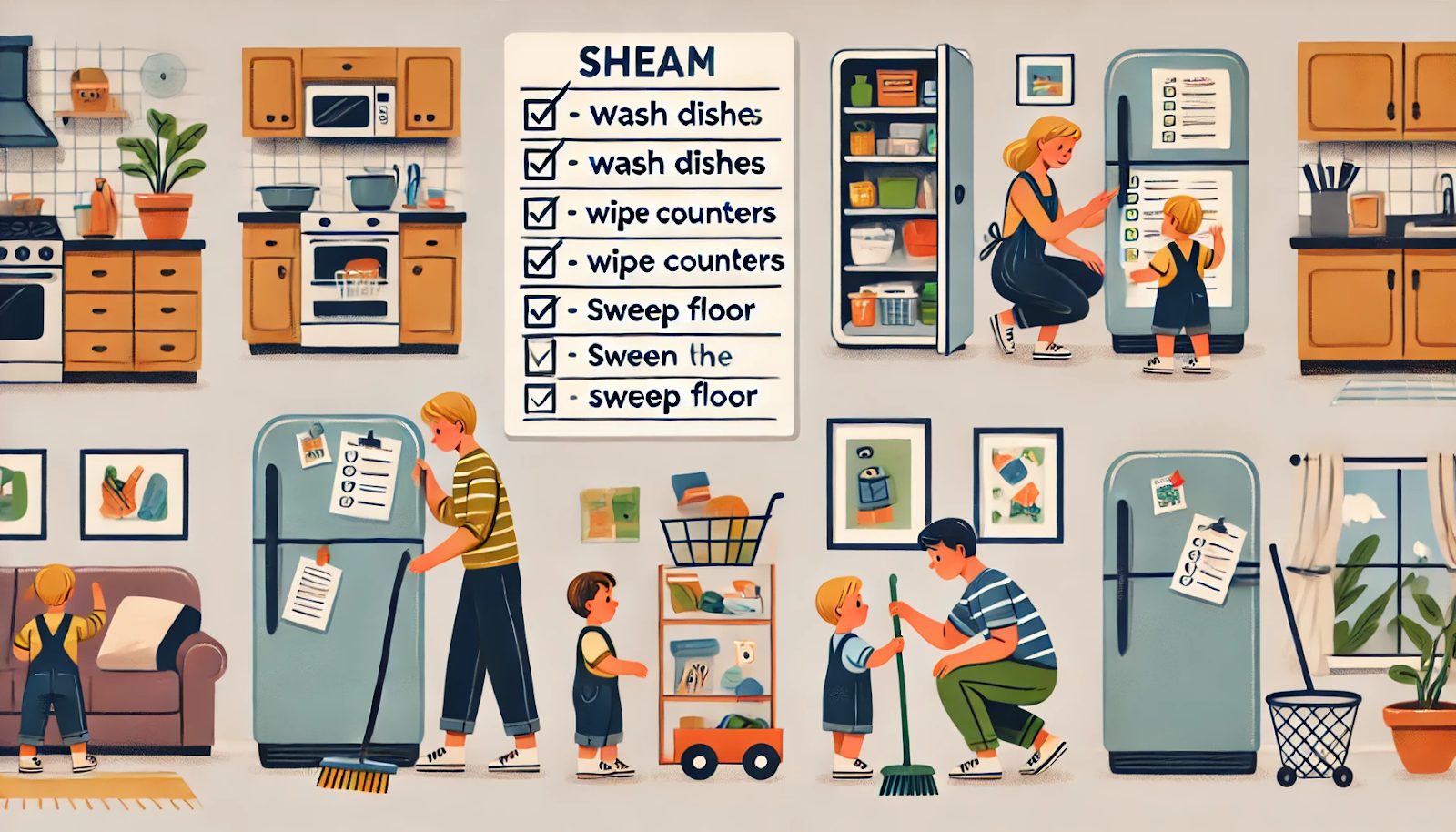
“Clean the kitchen” means different things to different people.
To me, it means dishes washed, counters wiped, and floor swept.
To my 10-year-old step-kiddo, it means shoving dirty dishes into the sink and calling it a day ✅
Spell out exactly what each task entails. Be specific about the standard required.
For younger kids, take pictures of what “clean” looks like. Visual cues work wonders.
For example, instead of “tidy your room,” try “put all clothes in the hamper, books on the shelf, and toys in the toy box.”
Clarity eliminates the dreaded “but I thought I did clean it!” arguments.
Step 4: Set Up a Simple Tracking System
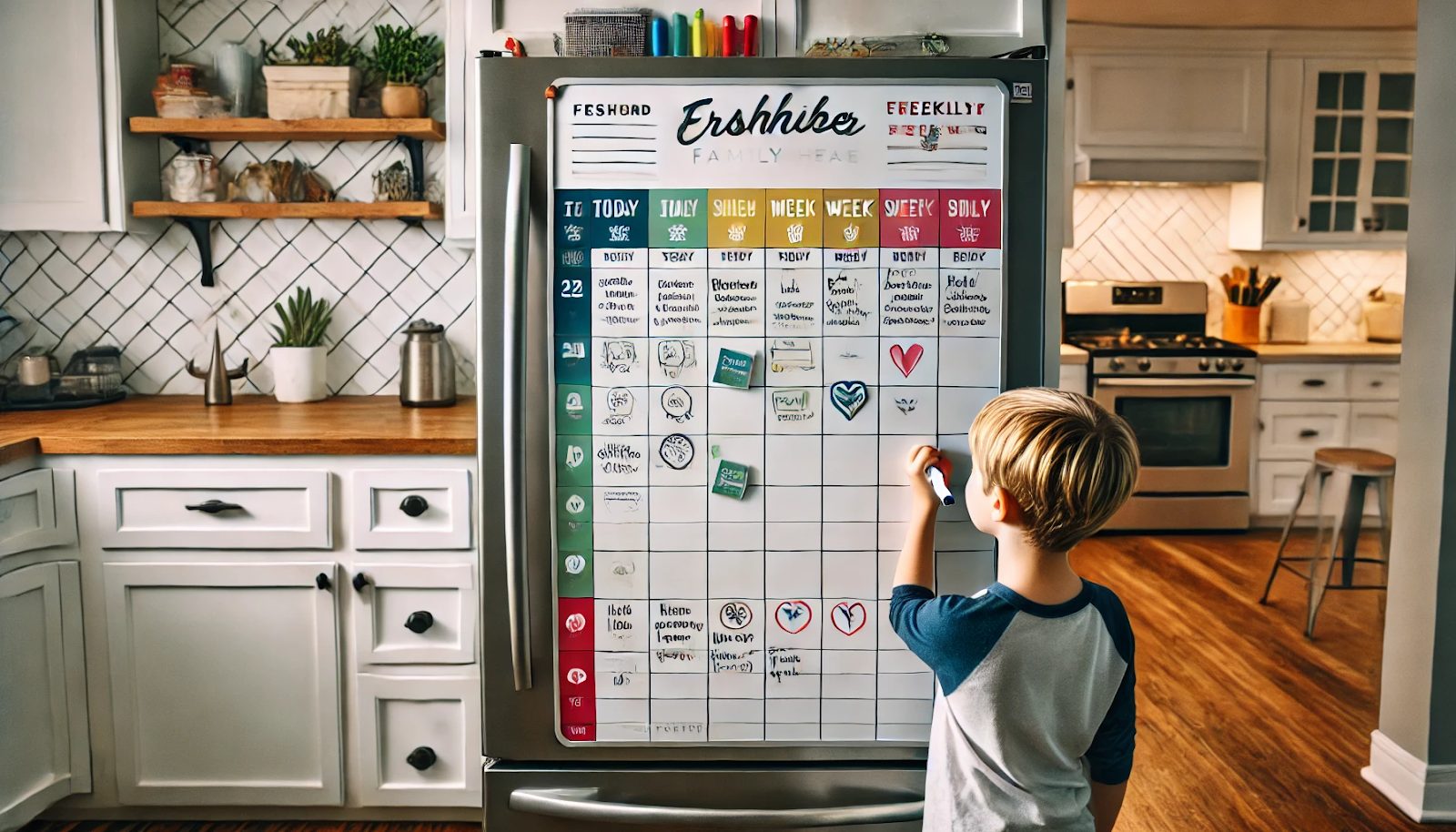
The best tracking system is one you’ll actually use.
Fancy apps are great if you actually open them, but a whiteboard works perfectly if it’s something you look at everyday.
In our home, we use two methods:
- A weekly family calendar on the fridge showing who does what each day
- A simple checklist for the kids’ daily and weekly responsibilities
Whatever system you choose, keep it visible and accessible to everyone. Out of sight means out of mind.
This family command center whiteboard has changed our lives completely. The layout is intuitive, and the magnetic backing means it stays put right on our fridge.
Step 5: Build in Accountability (Without the Nagging)

Accountability is where most chore systems break down. Nobody wants to be the household nag, constantly reminding everyone to do their tasks.
Instead, build accountability into your system:
- Set a specific time for chores to be completed ⏰
- Create natural consequences for incomplete tasks
- Use visual reminders rather than verbal ones
In our home, morning chores must be done before screen time. Evening chores happen right after dinner.
These clear boundaries eliminate the need for constant reminders.
When chores don’t get done? Natural consequences follow.
No clean soccer uniform for practice tomorrow? That’s a learning opportunity, not a crisis.
Step 6: Make It Rewarding (Not Bribery)

Controversial opinion: Chores shouldn’t always be tied to monetary rewards.
Everyone contributes because we’re all part of the family team 🧑🤝🧑
That said, recognition matters. Appreciation matters. Celebration matters.
Instead of paying per chore, we have a weekly family celebration when everyone has met their responsibilities. Maybe it’s a special dessert or a movie night.
For older kids, consider tying larger allowances to overall household contribution, not individual tasks.
However, sticker charts might work better for younger kids.
This reward chart has been a game-changer for our 7-year-old, who loves seeing her progress visually tracked.
Step 7: Be Flexible and Adjust Regularly

No system survives contact with real life unchanged. Be prepared to adjust.
Schedule a monthly family meeting to discuss what’s working and what’s not. Make changes together as a team 👭
Some questions to consider:
- Are tasks appropriately matched to abilities?
- Has anyone’s schedule changed?
- Are there new chores that need to be added?
- Does anyone feel overwhelmed or underutilized?
In our home, chore assignments rotate quarterly. This prevents burnout and ensures everyone learns different household skills.
Step 8: Use Time-Saving Tools Wisely

The right tools can make chores significantly easier and faster. But beware the trap of buying gadgets that end up as clutter.
For our small apartment, multi-purpose tools are essential. Our handheld vacuum works on furniture, floors, and even the car 🚗
These microfiber cleaning cloths have replaced paper towels, specialty dusters, and window cleaners in our home. They clean nearly every surface with just water.
For families with busy schedules, consider which chores could be automated or simplified.
This iRobot vacuum has been a game-changer in my home, but things like programmable slow cookers and/or auto-delivery services might be the things worth spending on for your home.
Step 9: Teach As You Go
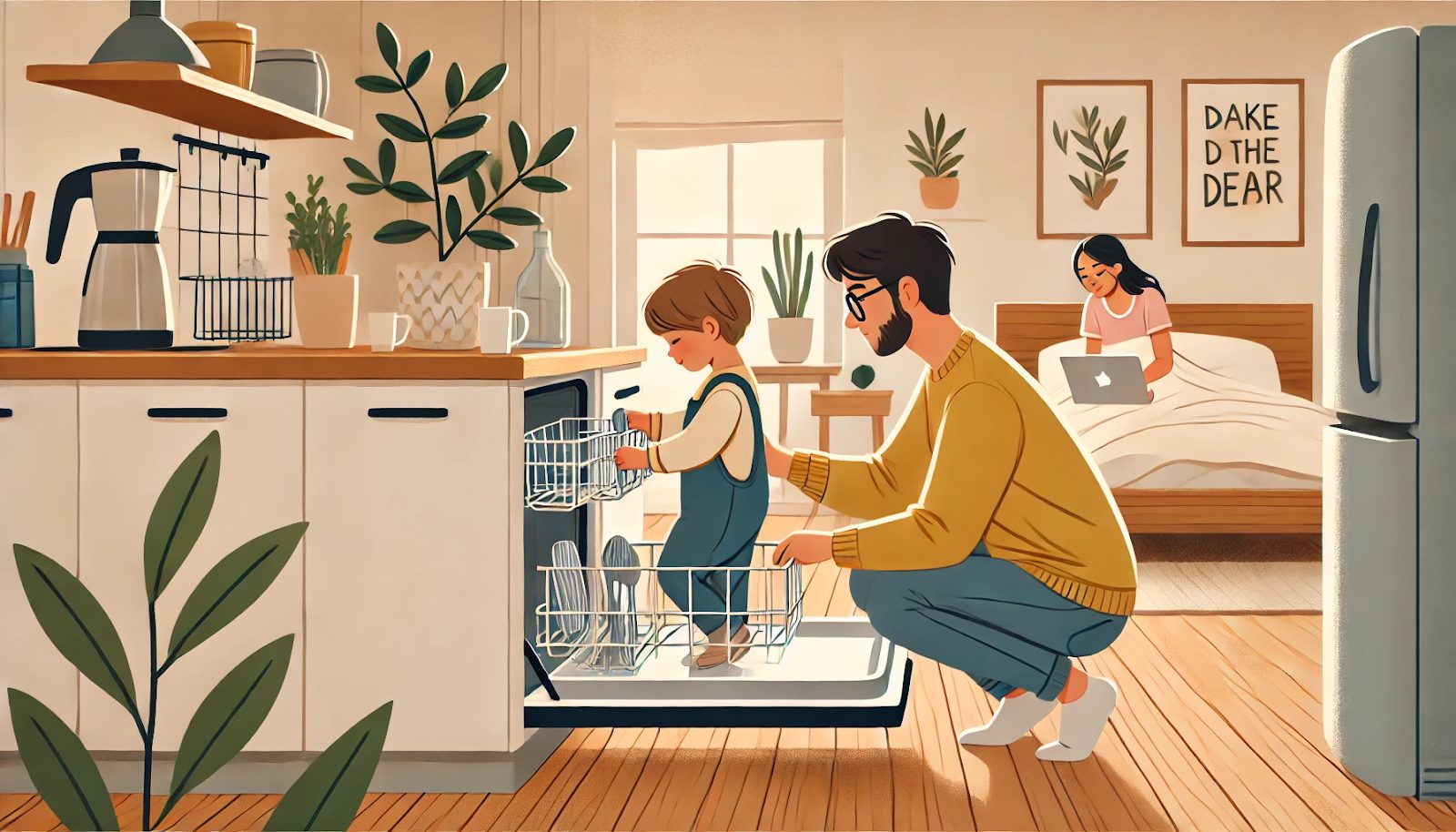
A truly sustainable chore system gradually teaches everyone to be more self-sufficient.
When introducing new chores, don’t just assign them. Take time to teach proper technique.
Yes, it’s faster to load the dishwasher yourself than to teach your 8-year-old. But the long-term payoff is worth the short-term inefficiency 📈
Start by demonstrating. Then do it together. Finally, observe while they try independently.
For younger kids, break complex tasks into smaller steps.
“Making your bed” might start with just pulling up the comforter, then gradually include straightening pillows and sheets 🛌
Step 10: Remember the “Why” Behind the “What”

When motivation wanes (and it will, so don’t stress it), reconnect with why your chore system matters.
It’s not about having a picture-perfect home. It’s about:
- Teaching life skills that build confidence
- Sharing responsibility fairly
- Creating more time for fun family activities
- Reducing household stress
- Showing respect for shared spaces and each other ✊
When our kids complain about chores, we gently remind them:
“We all help because we’re a team. When everyone does their part, we all have more time to play together.”
My Final Thoughts: Your Perfect Chore System Is the One You’ll Actually Use
The most effective household chore system isn’t the most elaborate or Instagram-worthy. It’s the one your family will consistently follow.
Start small. Build gradually. Celebrate progress. Adjust as needed.
Remember that the goal isn’t perfection—it’s a functional home where responsibilities are shared and everyone contributes according to their abilities 🏡
With clear expectations, consistent routines, and the right balance of accountability and flexibility, you can create a chore system that actually sticks.
No more tripping over toys or sighing at sinks full of dishes. Just a home that works as hard as you do to keep everything running smoothly.
Now go ahead and put that first chore chart on the fridge. Your future self will thank you.