
Table of Contents
Last night, I stepped on my third LEGO of the day, and something in me finally snapped!
Well, I’m not talking about those plastic bricks (those are pretty indestructible) – but my patience with this regular toy chaos. If you are a parent, you already know the drill. 😕
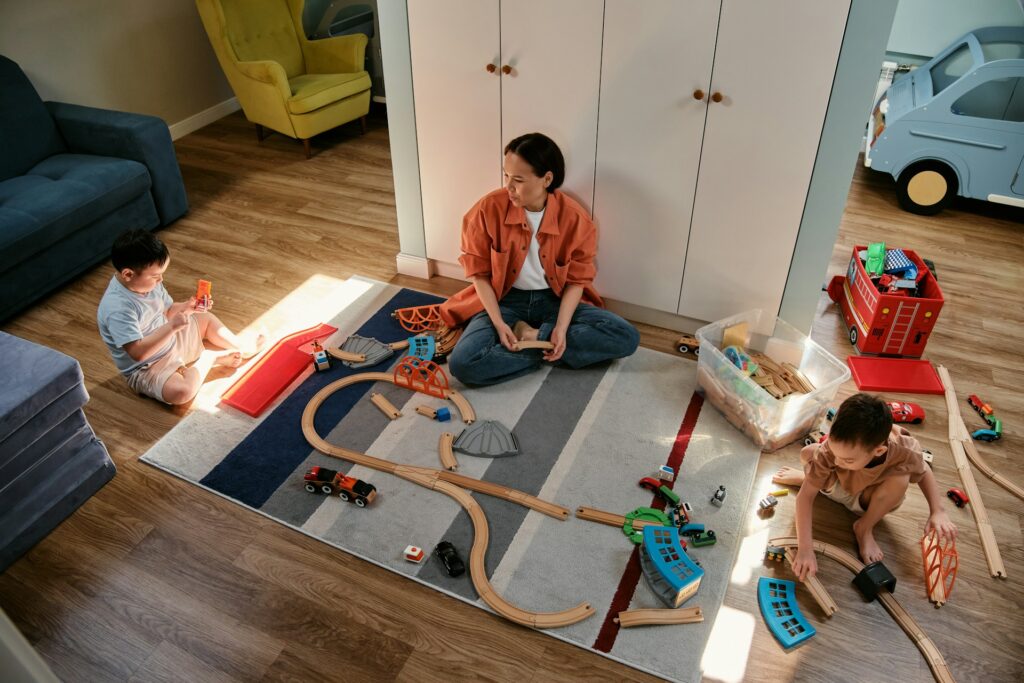
Cleaned the playroom just an hour back? Go and see, it looks like a tornado hit right now. Despite your best intentions, you will find yourself muttering through gritted teeth when you shove armfuls of toys into any blank cartoon or container.
After all, you will have to clear a path. However, this time, I didn’t give up. I kept on searching for ways to create a solid system for kids’ toys and finally got this… 🤓
Step 1: Declutter (Yes, It Needs to Happen) 🧹
Before setting up a system, cut down on toy clutter. More toys don’t equal more fun—they often overwhelm kids and make clean-up impossible.
- Start with a toy audit. Pull out everything and sort it into categories: keep, donate, and toss.
- Look for broken pieces or missing parts. If something can’t be used properly, let it go.
- Ask yourself: Does my child actually play with this? If it’s been sitting untouched for months, it’s time to move on.
- Involve your child (if possible). Let them pick a few favorites and explain that donating helps other kids.
Decluttering makes organizing easier and helps kids appreciate the toys they truly love.
Step 2: Sort Toys into Categories for Easy Access 📦
Once you’ve decluttered, group similar toys together. Kids do better with clear categories, making it easier to find and put things away.
Common toy categories:
✔️ Building Toys – Legos, blocks, magnetic tiles
✔️ Stuffed Animals & Dolls – Plush toys, baby dolls, action figures
✔️ Arts & Crafts – Crayons, markers, coloring books, stickers
✔️ Pretend Play – Kitchen sets, dress-up clothes, play food
✔️ Puzzles & Games – Board games, card games, brain teasers
✔️ Outdoor Toys – Balls, jump ropes, sidewalk chalk
Categorizing keeps things organized and teaches kids where items belong.
Step 3: Use the Right Storage (Less Is More) 🏡
Fancy storage systems don’t keep toys organized—a simple system does. The goal? Easy-to-use storage that works for kids.
Best storage solutions:
- Open Bins & Baskets – Perfect for quick toss-and-go cleanups.
- Cube Organizers – Keep categories separate without making it complicated.
- Clear Labeled Containers – Help kids find what they need without dumping everything out.
- Rolling Carts – Great for art supplies or small toys that move around the house.
- Over-the-Door Organizers – A lifesaver for stuffed animals, dolls, or small toys.
Choose storage that kids can use independently. If they can’t reach or open it, they won’t use it.
Step 4: Label Everything (Even for Non-Readers) 🏷️
Labels are a game-changer for toy organization. They tell kids exactly where things go, making clean-up automatic instead of a guessing game.
For younger kids, picture labels work best. Use simple icons or photos so they recognize where items belong. Older kids can use word labels to keep things structured.
Labeling makes cleanup faster, easier, and way less frustrating.
Step 5: Rotate Toys to Keep Things Fresh 🔄
Too many toys at once create chaos. Toy rotation keeps things exciting without overwhelming your child.
How it works:
- Keep out a limited number of toys and store the rest.
- Every few weeks, swap them out for a “new” selection.
- Let kids rediscover old favorites without adding more clutter.
Toy rotation reduces mess and increases creativity because kids focus on what they have instead of getting overwhelmed.
Step 6: Set Up a “Clean-Up Routine” That Kids Actually Follow ⏳
The best system fails without a routine. Teach kids to put things back right after playtime—not at the end of the day when they’re tired.
Make cleanup fun and fast:
- Use a cleanup song. Set a timer and see if they can beat the clock.
- Turn it into a challenge. “Who can pick up the most Legos in one minute?”
- Start young. Even toddlers can help if the system is simple enough.
- Praise their effort. A high-five or a “great job” keeps them motivated.
The goal is consistency. When clean-up becomes part of playtime, it stops feeling like a chore.
Step 7: Have a System for Outgrown & Broken Toys 🚫
Toys pile up because they don’t get cleared out regularly. Create a system for dealing with outgrown, broken, or unused toys before they take over.
- Keep a donation bin in the closet. When kids stop playing with something, toss it in.
- Set a “one in, one out” rule. A new toy comes in? One goes out.
- Check for broken pieces monthly. If it’s missing parts, it’s probably time to toss it.
A routine prevents clutter from creeping back in.
Step 8: Designate a “Mess-Free” Zone 🚀
Toys shouldn’t be everywhere. Set boundaries for where toys belong—and where they don’t.
Ideas for mess-free zones:
🚫 No toys in the kitchen.
🚫 No toys in the bathroom.
✅ Toys stay in the playroom, bedroom, or a designated space.
This rule stops toys from spreading all over the house and keeps cleanup simple.
Why This System Actually Works ✅
Most toy organization systems fail because they’re designed for adults, not kids. This system works because it’s:
✔️ Easy to follow – No complicated rules.
✔️ Kid-friendly – Everything is within reach.
✔️ Low-maintenance – No need for daily overhauls.
✔️ Sustainable – Once it’s set up, it runs itself.
The best part? It reduces stress for everyone. No more nagging. No more stepping on toys. Just a clean, functional space that makes life easier.
And that’s a wrap! Try these hacks today — remember, a little effort now creates a system that works long-term! 🎉

Related posts:
 How to Set Up a Fool-Proof Chore System That Actually Works
 7 Easy Tips for Organizing a Kids Room That Actually Lasts: A Mom’s Guide to Ending the Mess
 Small Space, Big Summer: How to Organize Your Summer Gear for Maximum Space
 Transform Your Home Into a Blissful Oasis: 5 No-Fuss Steps to Create Your Own Stress-Free Zone