Steal This Fool-Proof Checklist for Decluttering Any Room (And Finally Get Your Space Back)
Table of Contents
Your closet is stuffed. Your drawers won’t close. And that “junk drawer” in your kitchen? It’s now three drawers and spreading fast 🙈
You don’t need a bigger space. You need a better system.
What’s coming next isn’t just another decluttering checklist. It’s the exact process I use in my own home, refined over years of trial and error (and countless trips to The Container Store).
No vague advice or impossible standards – just practical steps that work in real homes with real people.
The Pre-Game Prep: Setting Yourself Up for Success
Before you touch a single item, grab these essentials:
- Four large boxes or bins (these collapsible storage containers are perfect for the job)
- Trash bags
- Post-it notes and a marker
- Your phone (for setting a timer) 📱
- A notepad or this handy decluttering planner 📋
Got everything? Good. Now here’s the game plan that makes this checklist different from all the others you’ve tried before.
The 15-Minute Rule That Changes Everything
Most people fail at decluttering because they try to tackle too much at once.
Your brain gets overwhelmed, decision fatigue kicks in, and suddenly that “quick closet cleanout” turns into a six-hour saga with clothes everywhere and you curled up in the corner scrolling through TikTok 🥴
Instead, we’re going to work in 15-minute chunks. That’s it. Set your timer, and when it goes off, you’re done for that session. No guilt, no “just five more minutes.” Done.
Why 15 minutes? It’s long enough to make progress but short enough that your brain won’t freak out. Plus, you can always do another session later if you’re feeling motivated.
The Four-Box Method: Your New Best Friend
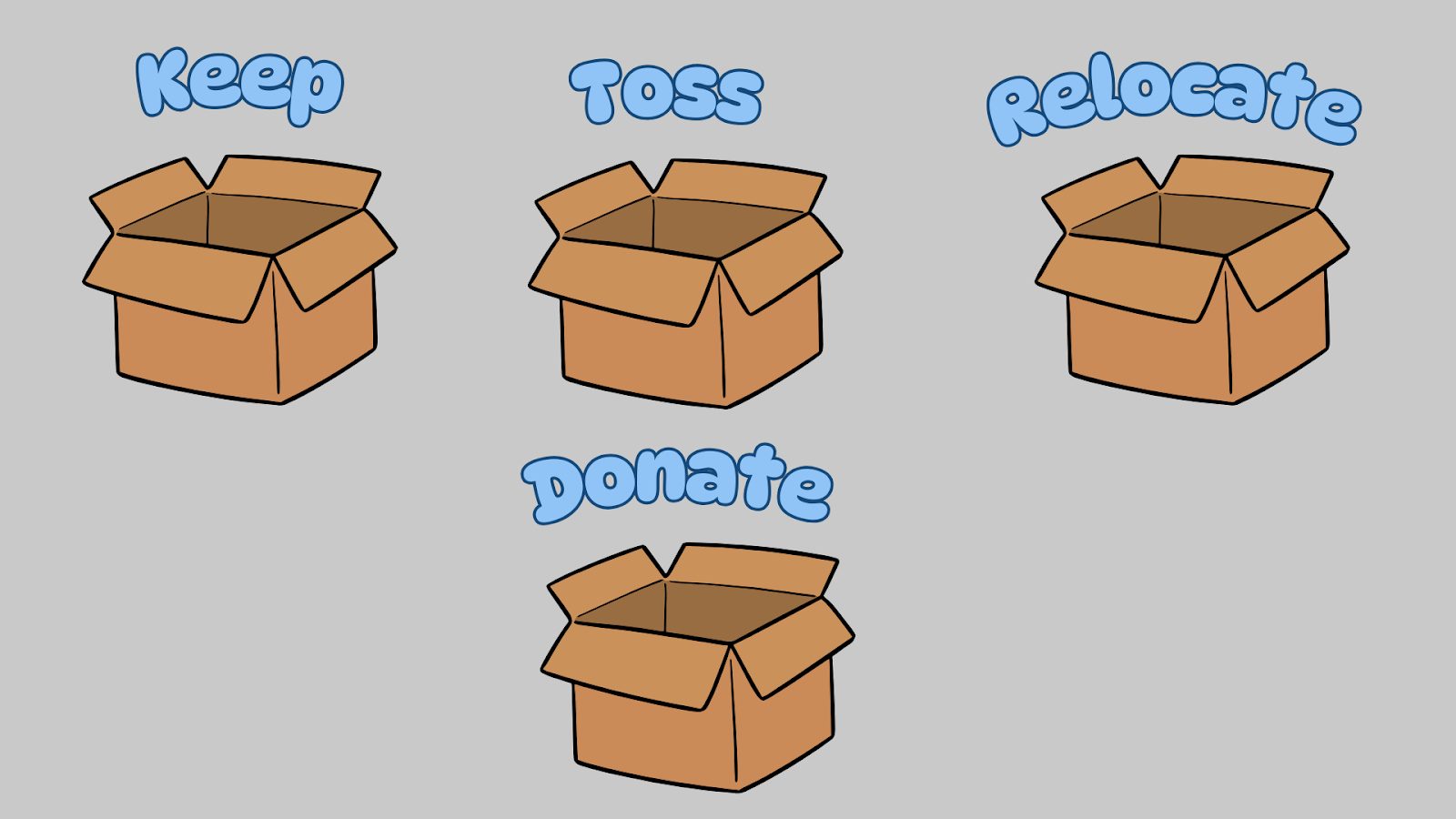
Label your boxes:
- 📦 Keep (in this room)
- 📦 Relocate (belongs somewhere else)
- 📦 Donate/Sell
- 📦 Trash
This system eliminates the “maybe” pile – that dangerous zone where items go to live in permanent limbo. Every single item you touch goes into one of these four boxes. No exceptions.
The Room-by-Room Battleplan
Starting Point: The Visible Surfaces
Begin with what you can see. Clear all flat surfaces first:
- Countertops
- Tables
- Tops of dressers
- Window sills
- Floor space
This gives you immediate visual progress, which helps maintain momentum. Your brain loves quick wins 🎊
Level One: The Easy Stuff
Start with obvious trash and items that clearly belong elsewhere. This includes:
- Empty containers
- Old magazines and newspapers
- Dead plants 🌿
- Broken items you haven’t fixed in months
- Mail older than two weeks 📧
- Empty shopping bags
Level Two: The Daily Use Items
These are things you actually use regularly. They deserve prime real estate in your space:
- Current season clothing
- Frequently used kitchen tools 🔪
- Daily skincare products
- Regular-use electronics and chargers
- Often-referenced documents
Keep only what you’ve used in the last month. Everything else gets downgraded to storage or goes bye-bye.
Level Three: Storage Solutions
Now we’re getting to the good stuff. Each item that made the cut needs a proper home:
For your closet:
- These velvet hangers save tons of space
- Clear shoe boxes make finding pairs easy
- Drawer organizers keep small items contained
For your kitchen:
- Cabinet organizers maximize vertical space
- Drawer dividers prevent utensil chaos
For your bathroom:
- Under-sink organizers utilize dead space
- These clear containers make products visible
- Over-door hooks add instant storage
Level Four: The Emotional Items
This is where most people get stuck. Let’s handle it differently:
Set a strict limit for sentimental items. One box per person, no exceptions. If it doesn’t fit, it doesn’t stay.
Quick questions for each item:
- Does it spark actual joy or just guilt? 🤔
- Would a photo serve the same purpose?
- Am I keeping this for me or someone else?
- If I saw this in a store today, would I buy it?
The Maintenance Plan: Keeping Chaos at Bay
Here’s the part most decluttering guides skip: how to keep your space organized once you’ve cleaned it up.
Daily Habits That Make a Difference
- The Two-Minute Rule: If it takes less than two minutes, do it now
- One In, One Out: Something new comes in? Something old goes out
- Evening Reset: Quick 5-minute tidy before bed 🛏️
- Weekly Review: 15-minute check of problem areas
Monthly Check-Ins
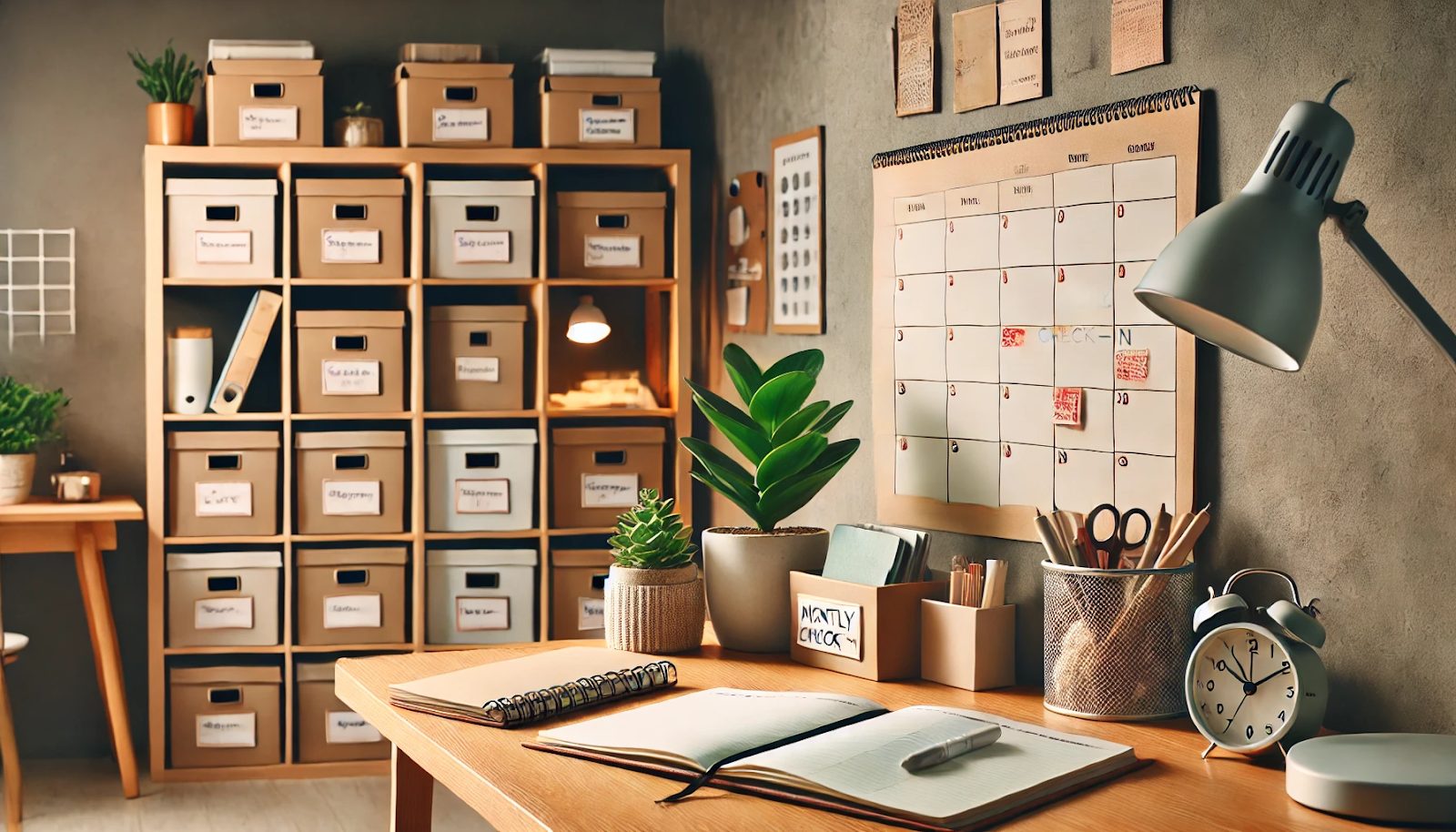
Schedule a monthly date with your space.
📆 Put it in your calendar like any other important appointment.
Focus on:
- Reviewing what’s working and what isn’t
- Adjusting storage solutions as needed
- Quick declutter of any problem spots
- Updating your systems based on life changes
Seasonal Switches
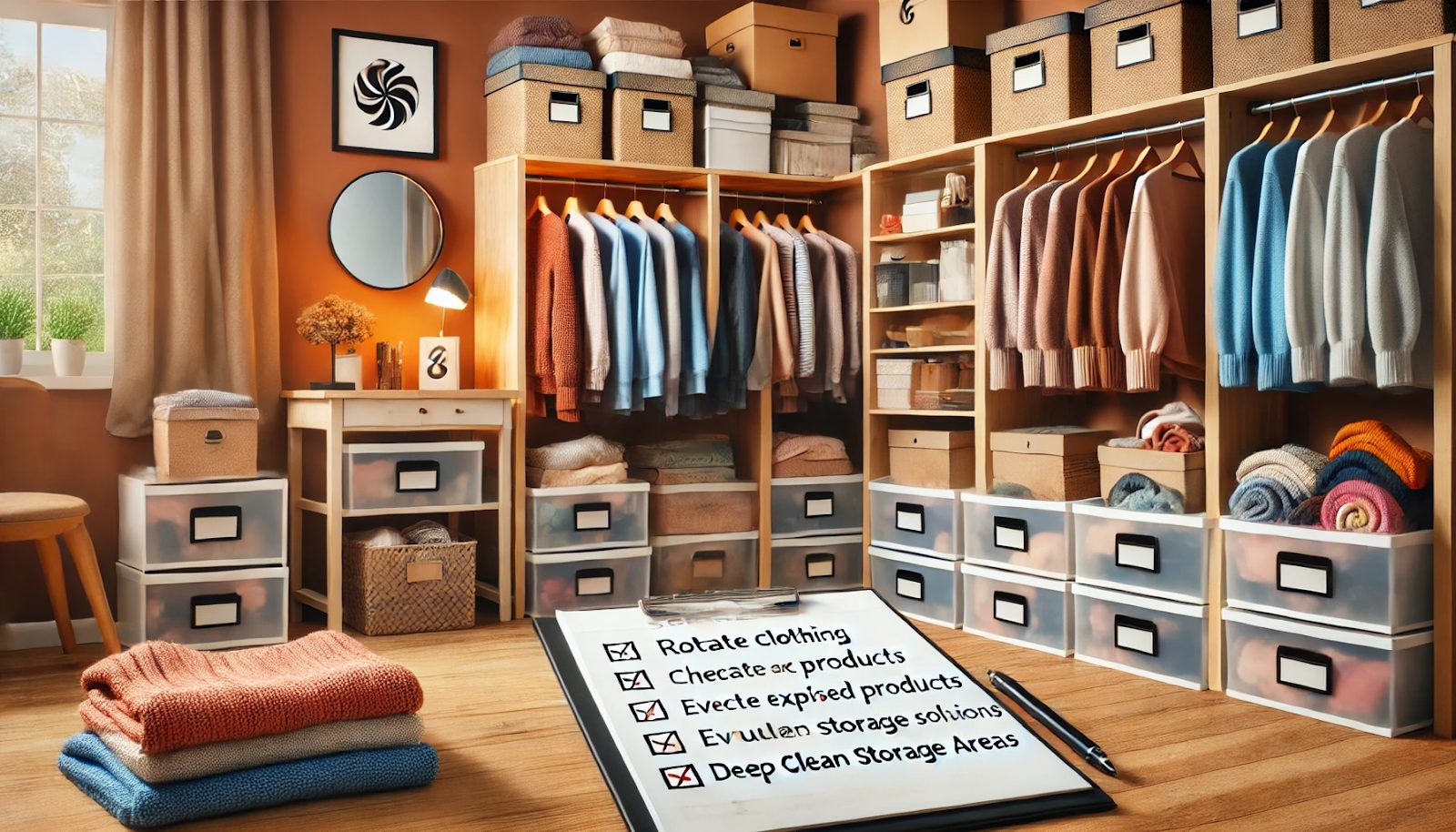
Four times a year, when the seasons change:
- Rotate clothing 👘
- Check expired products
- Evaluate storage solutions
- Deep clean storage areas
Problem-Solving Your Specific Space Challenges
Small Space Solutions
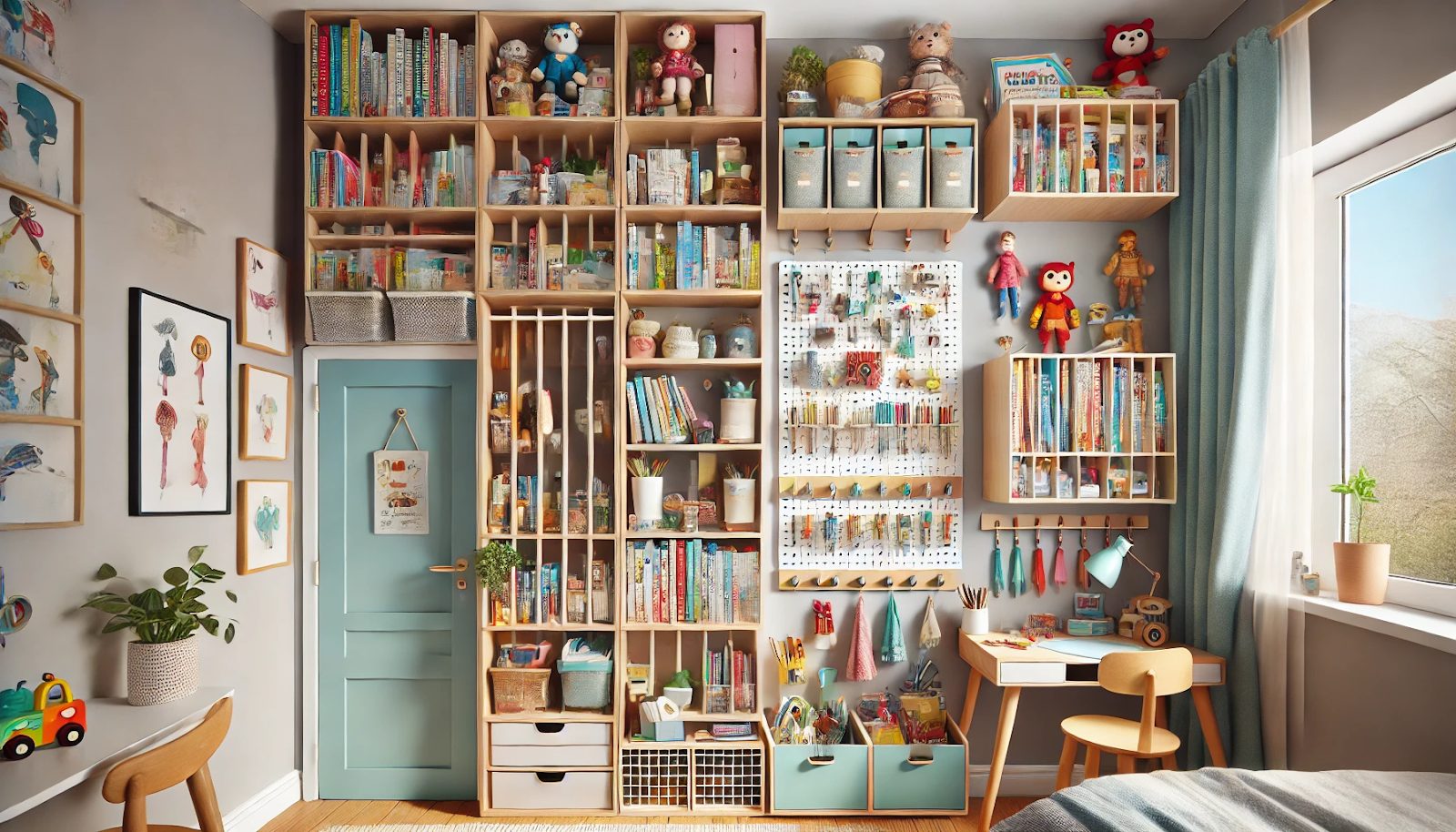
Living in a tiny apartment? Try these tricks:
- Use vertical space with these wall-mounted shelves
- Invest in furniture with hidden storage
- Maximize closet space with vacuum storage bags
- Consider furniture that serves multiple purposes
Shared Space Strategies
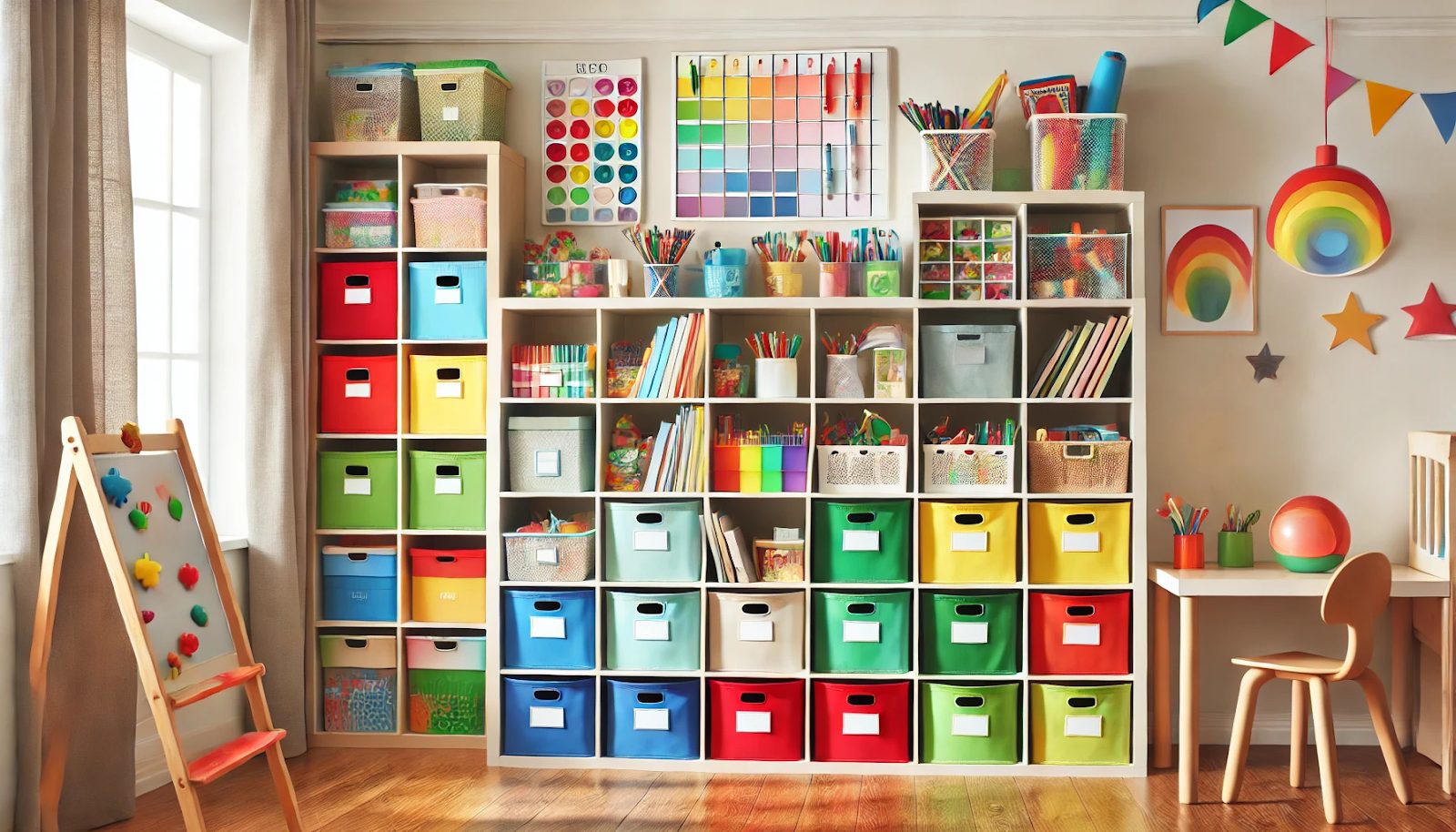
When you’re organizing a space used by multiple people:
- Label everything clearly 🏷️
- Assign specific zones for each person
- Use color coding for quick identification 🌈
- Keep shared items in easily accessible spots
- Create simple systems everyone can follow
Kid-Friendly Organization
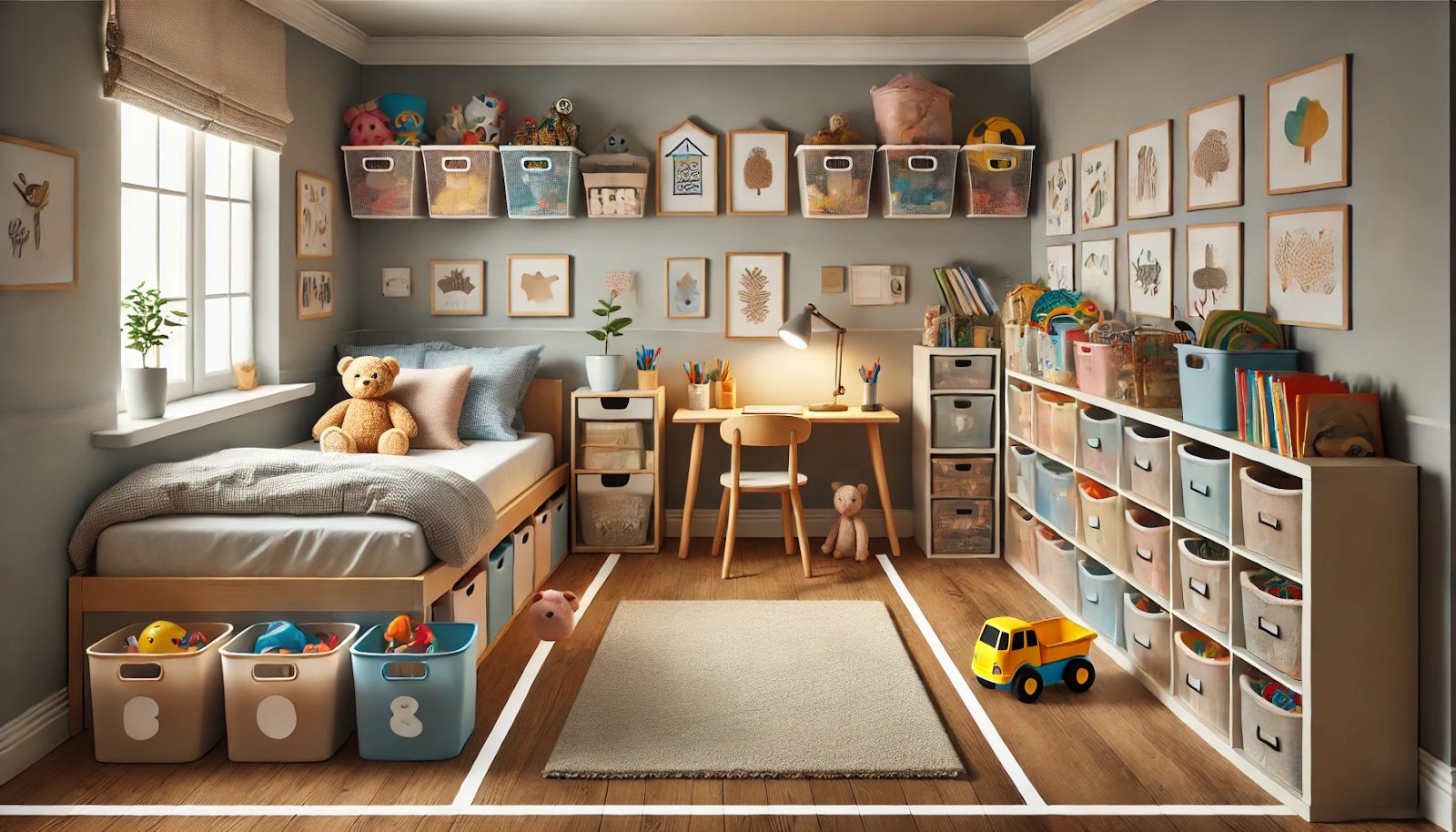
Making organization work with little ones:
- Place frequently used items at kid height
- Use picture labels for young children
- Make cleanup into a game 🧹
- Have designated spaces for toys
- Rotate toys to prevent overwhelm 🪀
The Reality Check: Common Pitfalls and How to Avoid Them
The “Just in Case” Trap
If you haven’t used it in a year and it’s not a true emergency item, let it go. Period.
Emergency items to keep:
- First aid supplies
- Basic tools 🔨
- Flashlights and batteries 🔦
- Important documents
Everything else? If you really need it later, you can buy it again.
The “But It Was Expensive” Excuse
The money is already spent. Keeping something you don’t use won’t bring that money back.
Instead, try to:
- Sell valuable items you don’t use
- Donate items for a tax deduction
- Learn from purchasing mistakes 🧠
- Focus on future decisions, not past ones
The “Someone Might Want This” Loop
If you’ve been holding onto something for more than six months waiting for “someone” to want it:
- List it for sale with a two-week deadline
- Donate it if it doesn’t sell
- Stop being a storage unit for hypothetical future needs
The Final Reality Check
Remember: A organized home isn’t about perfection. It’s about creating a space that works for your real life.
Your home should:
- Support your daily activities
- Make life easier, not harder
- Adapt to your changing needs
- Feel welcoming and comfortable
Success looks like:
- Finding things when you need them
- Maintaining order with minimal effort
- Enjoying your space more
- Spending less time cleaning
Keep this checklist handy (💡 maybe bookmark it or save it to your phone). Come back to it whenever you need a refresh or reality check.
Remember, you’re not just organizing stuff – you’re creating space for the life you want to live. And that’s worth every 15-minute timer you set 🙌