The Genius Way to Organize Kids Artwork Without Throwing It Away
Table of Contents
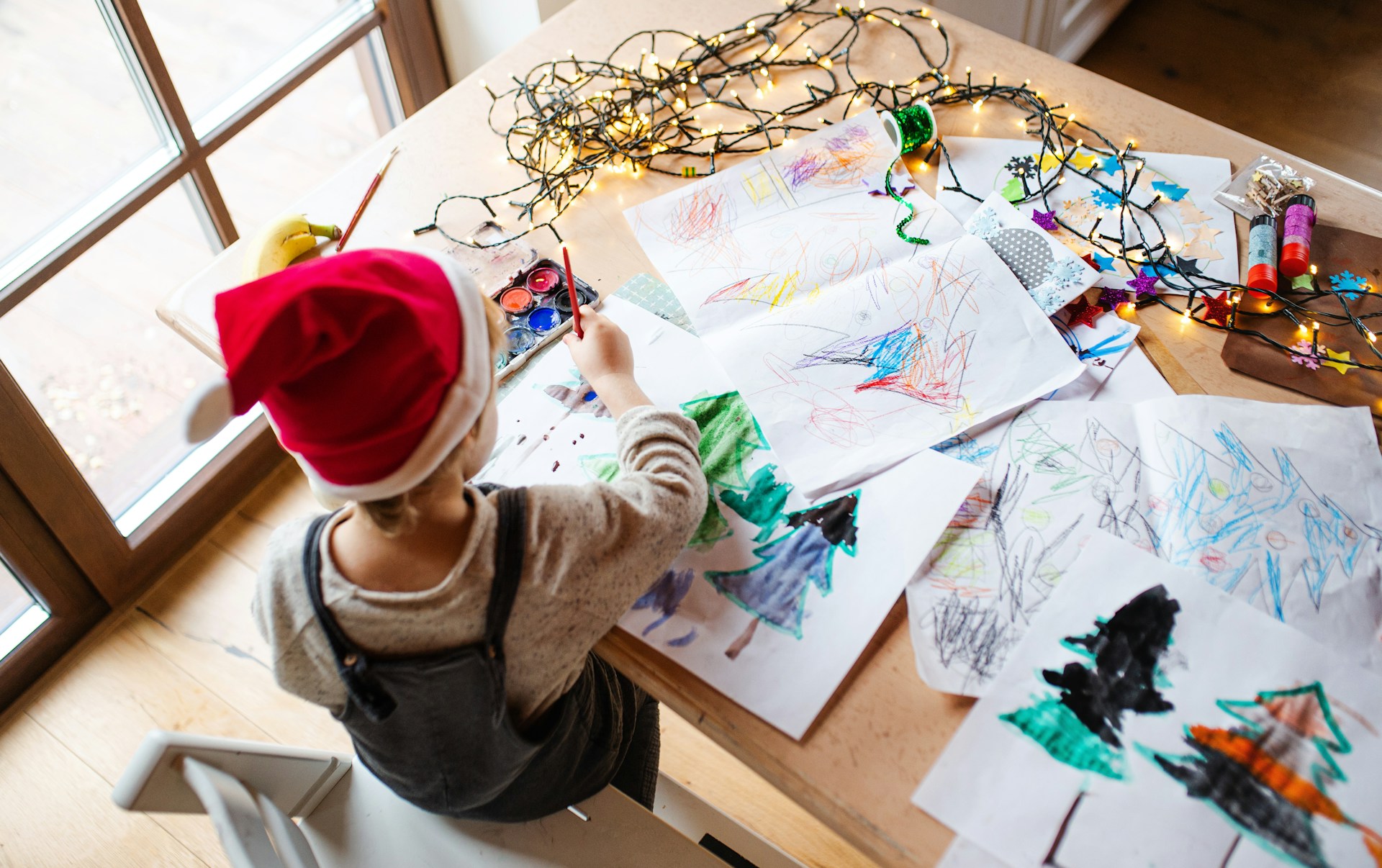
Your kitchen counter is buried. Again.
Under a mountain of finger paintings, construction paper creations, and abstract masterpieces that your little Picasso proudly brought home this week.
You’re stuck in that impossible position every parent knows too well: you can’t possibly keep everything, but throwing away those little handprints feels like tossing away pieces of your child’s heart 🧸
But here’s the good news: you don’t have to choose between living in a paper-filled chaos or secretly stuffing treasured artwork into the recycling bin while your kids sleep.
There’s a middle path. A smart way to honor their creativity without letting it take over your home.
The Emotional Weight of Kids’ Artwork
First, let’s talk about why this is so hard.
Each crayon scribble represents a moment in your child’s development. A milestone. A memory of who they were at that exact age.
That’s why the refrigerator door can only hold so much before magnets give up and everything slides to the floor 🧲
The problem isn’t just physical space—it’s the guilt that comes with deciding what stays and what goes.
But keeping everything isn’t actually helpful either. When artwork gets stuffed into drawers or boxes, it often deteriorates, gets forgotten, or becomes such an overwhelming pile that no one ever looks at it again 📦
The key is being selective and purposeful. Quality over quantity.
Smart Solutions That Actually Work
1. The Rotating Gallery System
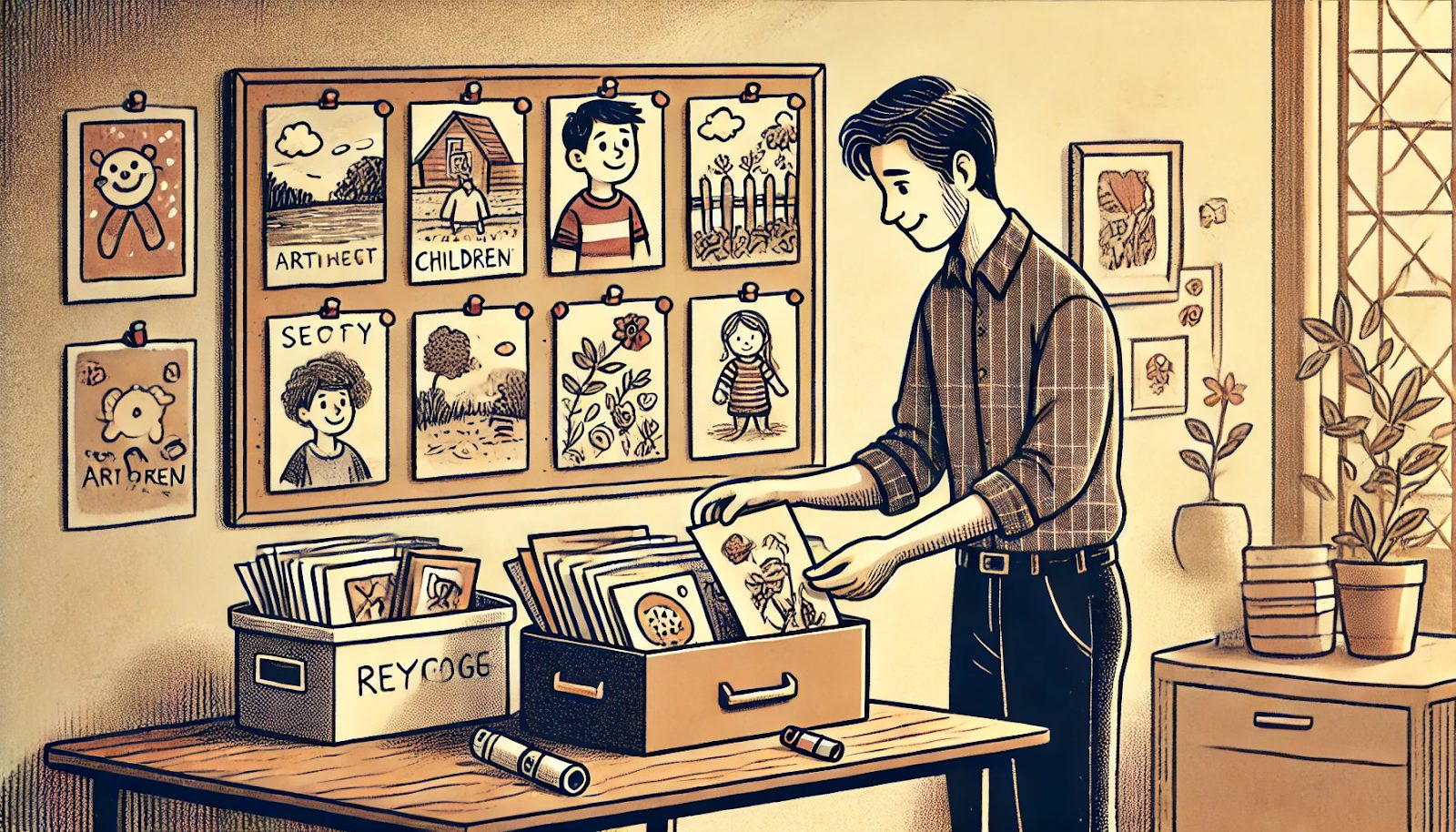
Create a dedicated display area where artwork can shine—but with limits.
Choose frames that make switching out artwork easy. I use these clip frames that let me slide new pieces in without taking the frame off the wall.
Set a schedule—maybe at the end of each month—to curate what stays on display. When something comes down, it gets sorted into one of three categories:
- Keep for long-term preservation
- Photograph and let go 📸
- Thank and release (more on this below)
This system teaches kids that their work is valued while also showing them that we don’t need to keep everything forever to appreciate it.
2. The Digital Archive Method
This is a game-changer for parents with limited space.
Get a decent scanning app on your phone. When a new masterpiece arrives home, take a high-quality photo before it has a chance to get crumpled, stained, or lost.
Create a simple folder system by child and year, or get fancy with tags for different types of art 🏷️
Once a year, turn these digital files into something tangible:
- Photo books dedicated to each child’s annual artistic journey
- A digital frame that cycles through their creations
- Custom calendars featuring seasonal artwork for family gifts
For the hard copies, we use this fireproof photo storage solution which is the grandparents’ favorite thing to look through every chance they get 👵🏻
3. The “Art of Letting Go” Ritual
This might be the most important part of the system.
Kids need to learn that the value of their creativity isn’t tied to keeping every physical piece forever. But this lesson needs to be handled with care.
Create a simple ritual for artwork that won’t be kept physically:
- Sit together and talk about what makes the piece special
- Take a photo together if you’re keeping a digital copy
- Thank the artwork for the joy it brought (yes, this sounds a bit Marie Kondo, but it works!)
- Decide together how to repurpose it—recycling, gift wrap, or even art supply for new creations ♻️
This teaches gratitude, mindfulness, and the healthy cycle of creation and release.
4. The Preservation Portfolio
For the truly special pieces—the handprint turkey from their first Thanksgiving, the self-portrait where they finally drew a recognizable face—create a limited-space preservation system.
Each child gets one portfolio or art storage box. When it’s full, something must come out before new pieces go in.
This flat art portfolio keeps special pieces safe from damage while taking up minimal space.
The limited space creates natural boundaries and teaches children to be selective about what’s truly special 💎
The Long View: Creating an Artistic Legacy
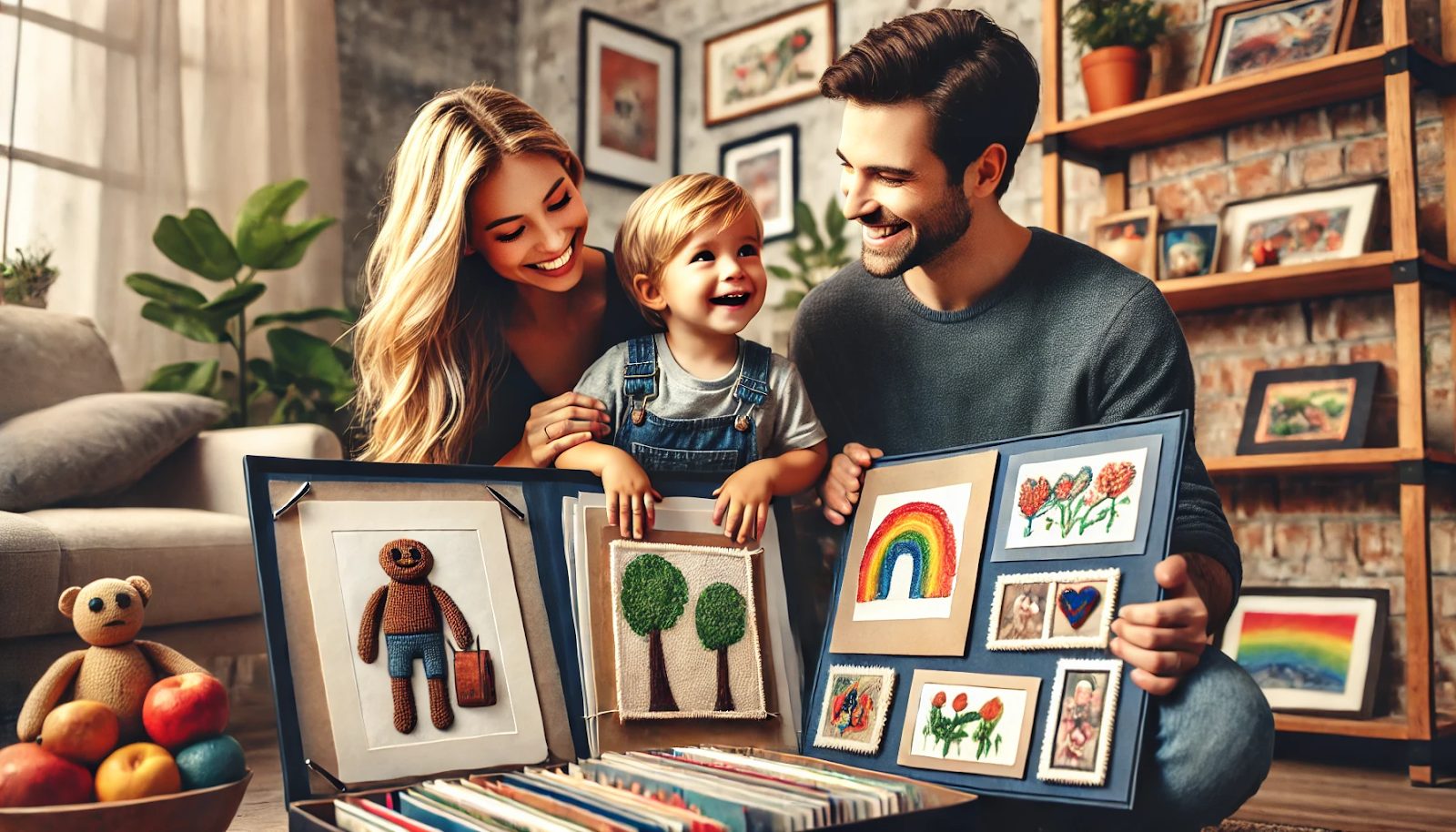
The ultimate goal isn’t just to manage clutter—it’s to honor your child’s creative journey in ways that will be meaningful to them years from now.
A well-curated collection of their best work, thoughtfully preserved and documented, will mean far more than boxes of crumpled, faded papers they’ll have to sort through someday.
When my stepdaughter recently found her art book from three years ago, her delight in seeing her “baby art” was far greater than if we’d handed her a massive bin of every scribble she’d ever made 👶
The selective preservation made each piece feel special and allowed her to clearly see how much her skills had developed.
Finding Your Own Balance

Every family’s art management system will look different based on:
- Your physical space constraints
- Your children’s volume of creative output
- Your personal attachment to physical mementos
- Your kids’ ages and personalities
The perfect system is the one that works for your family—that balances respect for creativity with practical living considerations 💡
The Art of Letting Kids Take Ownership
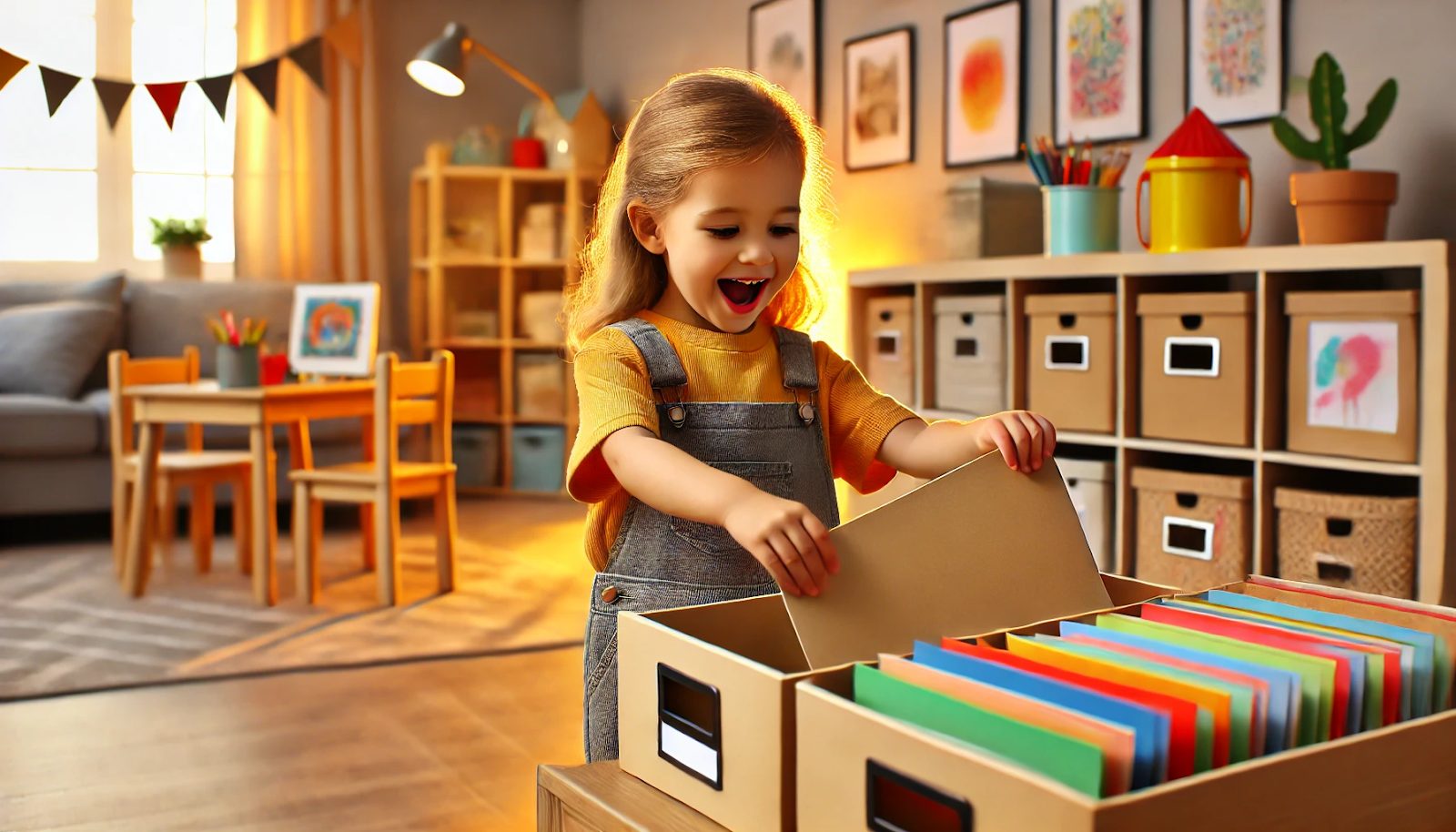
As children grow, gradually shift responsibility for curating their own artwork collection to them 🖼️
By involving them in decisions from an early age, you’re teaching valuable skills about mindfulness, organization, and focusing on what truly matters.
Keeping What Matters Without Keeping Everything
The artwork flooding your home represents something beautiful: a child’s developing mind, expressing itself with joy and experimentation 🖌️
With thoughtful systems that respect both the emotional value of these creations and the practical constraints of family life, you can preserve what matters most.
No guilt. No clutter. Just meaningful memories and space to create more.
And that’s the true art of raising creative kids in a home where everyone can thrive.